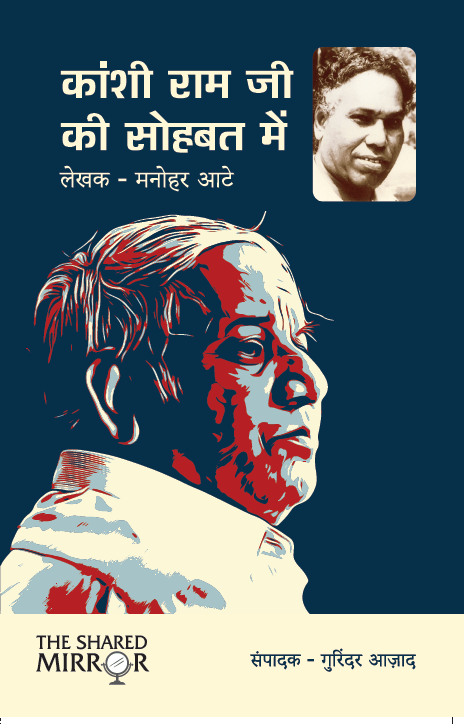
कांशी राम जी की सोहबत में

कांशी राम जी की सोहबत में

डॉ. बाबा साहेब आंबेडकर के महापरिनिर्वाण के बाद बहुजन समाज में एक अँधेरा छा गया। सर्व मिशन छिन्न-विछिन्न हो गया। ऐसी भयानक एवं खौफनाक सामाजिक परिस्थिति में पंजाब प्रान्त के रोपड़ जिले में एक नौजवान डॉ. बाबा साहेब आंबेडकर का एक सिपाही कांशी राम पूना शहर की सड़कों पर उतरा। निकला तो वह अकेला ही था लेकिन चलते-चलते उसे अनेक साथी मिलते गए। लेखक भी पूना की सड़कों का रोड-मास्टर है जो कांशी राम का एक साथी है। कारवाँ बढ़ता गया। कांशी राम को चैन की नींद कहाँ थी। सवेरे पाँच बजे वह सड़कों पर साइकिल लेकर सवार होता था। ना खाने की परवाह न सोने की। एक भूत सवार था उसके दिमाग में। बाबा का अधूरा मिशन, पूरा करना है। निकला, दिमागों के साथ दिलों को जोड़ने को। दिलों-दिमागों को जोड़ना बहुत कठिन काम था। लेकिन ‘पट्ठा’ इरादे का पक्का था। ‘जब इरादा पक्का हो तो रास्ता भी निकल आता है’ उसने रास्ता खोज लिया। ~ मनोहर आटे  

Price: Rs 200

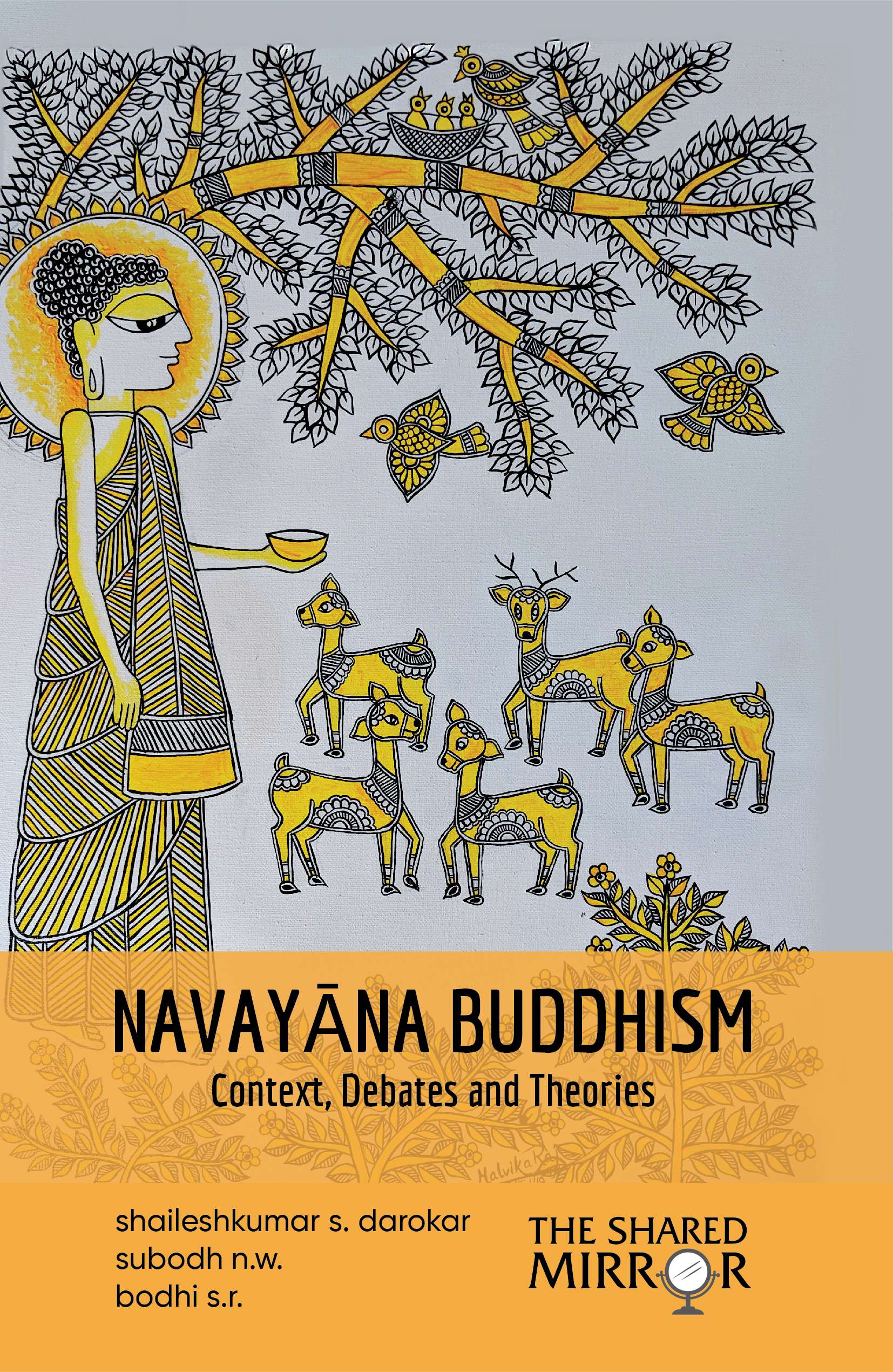
New Book! NAVAYĀNA BUDDHISM: Context, Debates and Theories

New Book! NAVAYĀNA BUDDHISM: Context, Debates and Theories

This book is an eclectic scholarly inquiry into Indian Buddhism post Dr. Babasaheb Ambedkar embracing the Buddha Dhamma Sangha in 1956. It engages with ontological propositions and debates concerning a methodology conceptualised by Babasaheb through a category he called ‘Navayana.’ In retrospect, through this category, Babasaheb attempted to partly revive and reclaim the original teachings of Sakyamuni, revise and reinterpret the history of Buddhism, and theoretically reposition the Buddha Dhamma in the Indian context. Based on the initial formulations and framework laid by Babasaheb, the first section of this book contextualizes and traces the historical evolution of this axiological movement; providing insights into the thinking, interpretation and experience of Indian Buddhists around the said category. The second section, titled ‘Equanimous Reflections,’ explores three fundamental processual Buddhist practices – the idea of taking refuge in the Tiratana, the process of epistemological reconstruction through Tisarana, and the Buddhist Way of Life as taught by Babasaheb.

New Book! EWS The Quota To End All Quotas

Our latest book, ‘EWS The Quota To End All Quotas’ by the Ambedkar Age Collective, has been released and is available to order here.

Reservations for the excluded majority in India began with SC/STs and followed by OBCs. They enabled increasing numbers of Bahujans to enter public institutions, despite strident abusive opposition. Now EWS, the counter-revolution is here. Will it end all other quotas? This book is a powerful collection of views and analyses of Bahujan political leaders, lawyers, researchers, writers, activists like: Dr. Suresh Mane, Dr. Thol. Thirumavalavan, Prof N Sukumar, Dr. Sthabir Khora, Dr. Ayaz Ahmad, Dr. Yogesh Pratap Singh, James Michael, Bobby Kunhu, Nidhin Donald, Rajanikanta Gochhayat, Omprakash Mahato, Jitendra Suna, Sundeep Pattem, Naaz Khair, Pradeep Dhobley, Abhishek Juneja, Naren Bedide (Kuffir): the book has their articulations, in the form of articles, papers, interviews, art etc.

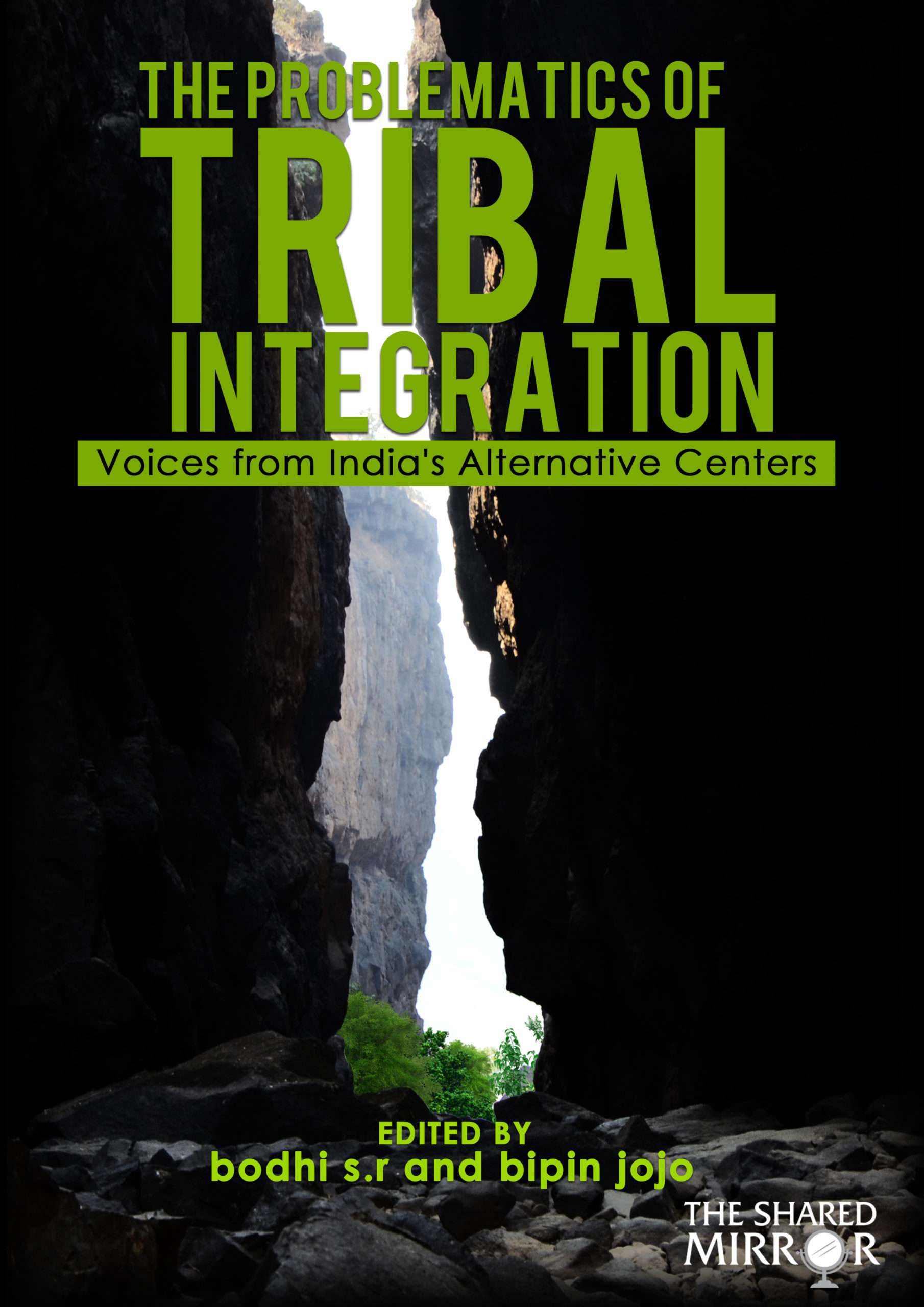
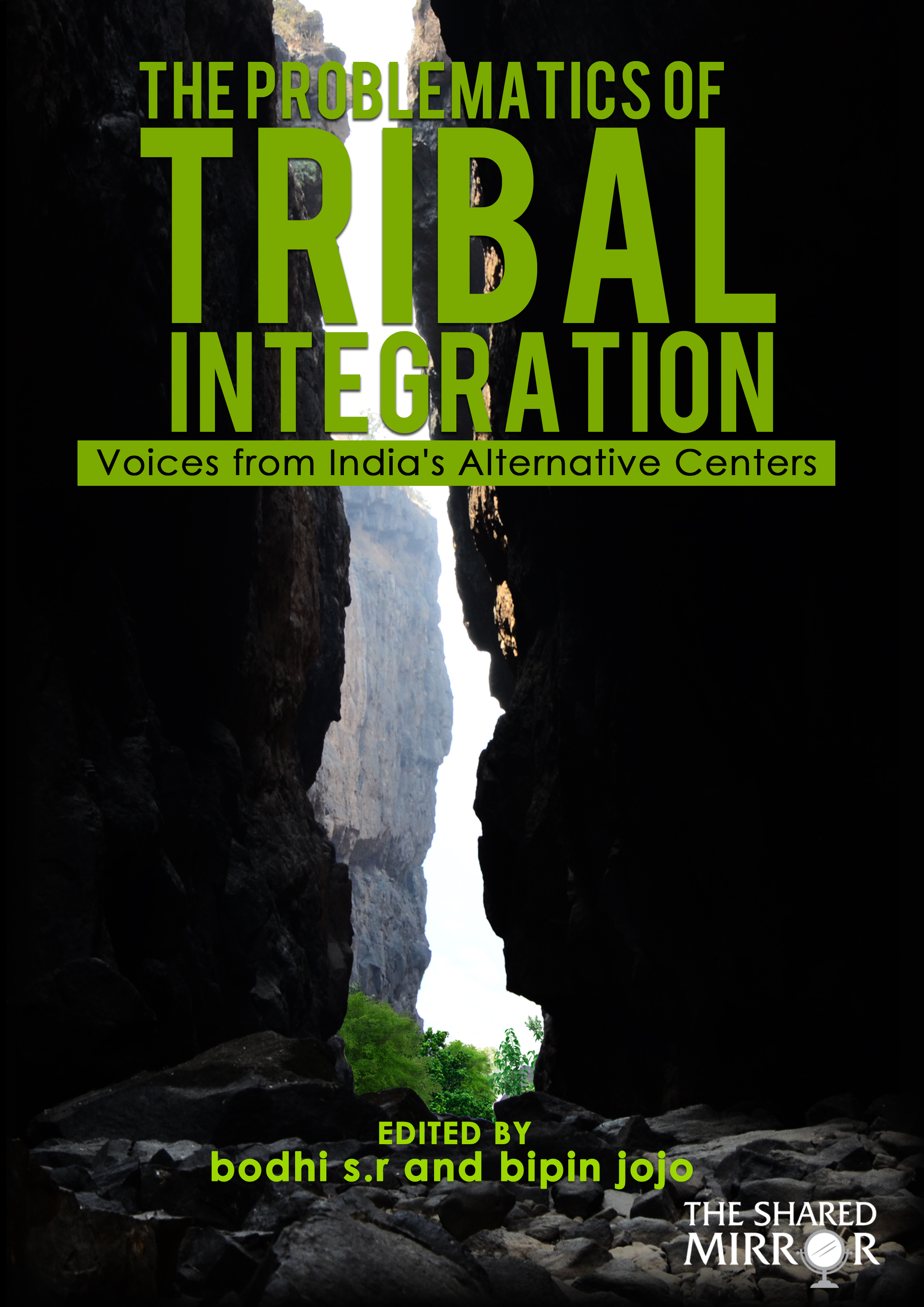
New ebook! The Problematics of Tribal Integration: Voices from India’s Alternative Centers

New ebook! The Problematics of Tribal Integration: Voices from India’s Alternative Centers

We are happy to announce our new ebook ‘The Problematics of Tribal Integration: Voices from India’s Alternative Centers‘ published by the collaboration between The Shared Mirror Publishing House and the Tribal Intellectual Collective India. We thank all the authors, copy-editors, proofreaders, friends and families who have contributed to the making of this book and have generously made this book available as a free download.

About the book

The book is thematised into four sections. Under the first section – Problematizing The
Discourse and Context are two chapters written by the indigenous scholar and foremost Tribal/Adivasi studies expert Prof Virginius Xaxa on the subject ‘Tribes and Indian National Identity: Location of Exclusion and Marginality’. This chapter is followed by a historical conspectus of the integration process from a tribal perspective by bodhi s.r & raile r. ziipao.
The second section – The Frame of Reference constitutes of four chapters. The first by Monica Sakhrani critically examines the politico-historical location of Scheduled Tribes in the Indian Constitution. The second is written by the foremost indigenous historian Bhagya Bhukya on the complex subject of Marxist and Nationalist constructions of adivasi uprising in India. This is followed by Rimi Tadu on the subject of integration and the state making process in the north east of India and by a chapter on the ideas of adivasi development of Verrier Elwin and Jawaharlal Nehru by Venkatesh Vaditya.

The third section of the book – Concrete Conditions and Dynamics is written by eleven
scholars. Each engages with the immediate context from varied regions of India. The first is written by J.J.Roy Burman on the complex subject of Sacred Groves. This is followed by
Shyamal Bikash Chakma on the controversial concept of Conservation Refugees and Richard Kamei who interrogates the concept of Collective Bargaining among the Rongmei Tribe in the state of Manipur. Following these chapters, we have Joseph Riamei writing on Tribes, Governance and Political Institutions in North East India, Kerlihok L. Buam on the Sixth Schedule and the Jaintia Hills Autonomous District Council, Jagmohan Boro on Rabha Ethnic Politics and Role of the State, Batskhem Myrboh on Non-tribal Migration in Meghalaya, Vulli Dhanaraju on Tribal Resistance to Colonial Construction of ‘Agency’ in Andhra, Pandurang Bhoye on Movements and Organisations among Adivasis in Maharashtra, Abhay Xaxa on Implications of Mining in Fifth Schedule Areas and Niraj Lakra who examines the fall out of the government’s attempt to Amend the CNT and SPT Act in the state of Jharkhand.

The last sections of the book are transcripts of two conversations and speeches by John F.
Kharshiing, the Adviser and Spokesperson of the Federation of Khasi States in his address to the General Assembly of Indigenous and Tribal Peoples and by Saneka Munda, an active participant of the Khutkati Rights Movement in Chotanagpur to the second national congress of the Tribal Intellectual Collective India.

This series is an academic collaboration between the Tribal Intellectual Collective India and The Shared Mirror. With the exceptions of a few, most of these chapters have been written by tribal/Adivasi scholars who are engaged with the subject. The Tribal Intelectual Collective India is one of the only academic fora of the tribes/Adivasis in India with a pan India membership.

~~~

Copyright © 2019, The Shared Mirror Publishing House and Tribal Intellectual Collective India (of the collection).

Copyright © of each work belongs to the respective author.
 

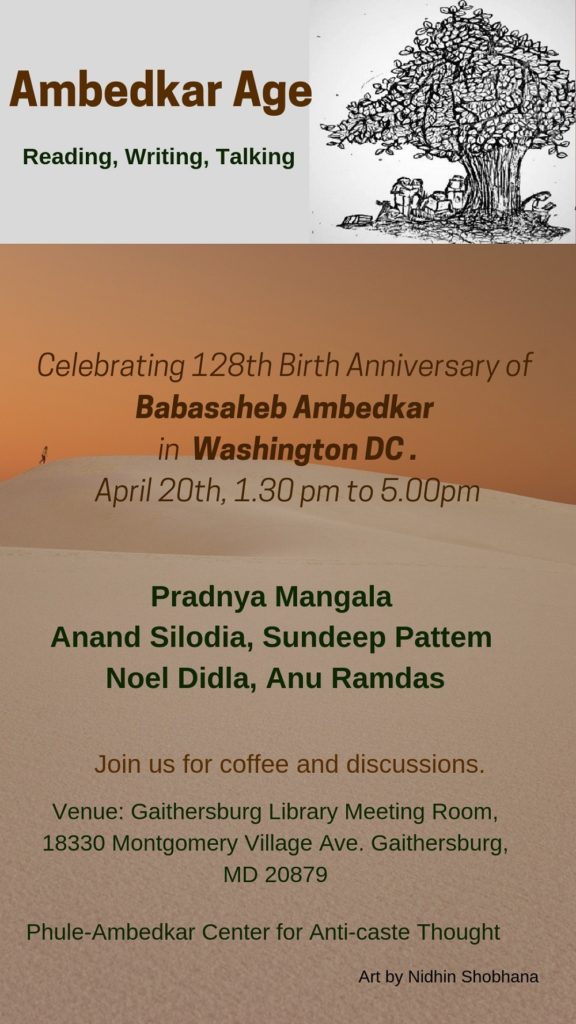
Ambedkar Age: Celebrating 128th birth anniversary of Babasaheb Ambedkar in the Washington DC area

Phule-Ambedkar Center for Anti-Caste Thought  

What better way to celebrate Babasaheb Ambedkar’s 128th Birth Anniversary than with books, reading and writing communities?

* It is 10 years of Round Table India – For An Informed Ambedkar Age. RTI has grown into the largest repository of contemporary writings focused on the task of Annihilation of Caste – join the discussion with the speakers.

The Shared Mirror Publishing House: A co-operative model for promoting Dalit-Bahujan literature and writers. More than 50 Bahujan women and men authors have been featured in the books published so far. Come and get your copies of their latest books and hear about the upcoming books.

Prabuddha – Journal of Social Equality: A journal effort focussed on the exploration of self-assertions & self-determination of emancipatory movements and relationships. Come and engage with us on how radical Anti-caste and Black radical activist-scholars are building community scholarship.

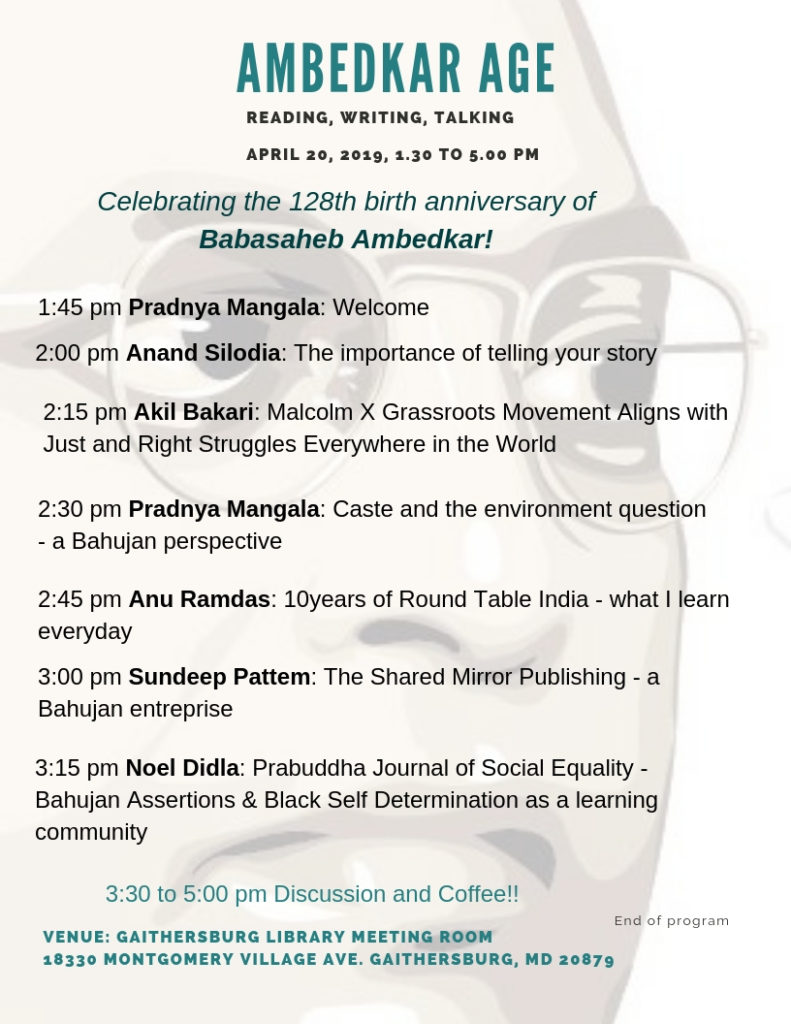
DC_poster5


The program details are below. Please follow the Facebook event page for updates.

Ambedkar Agee Reading writing talking (15)

All are welcome!

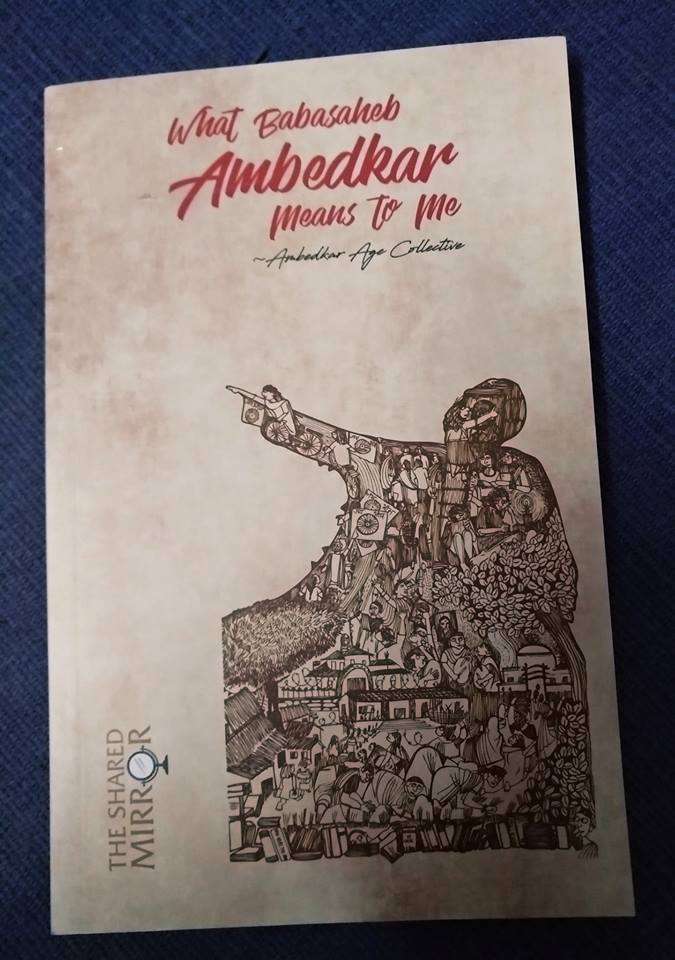
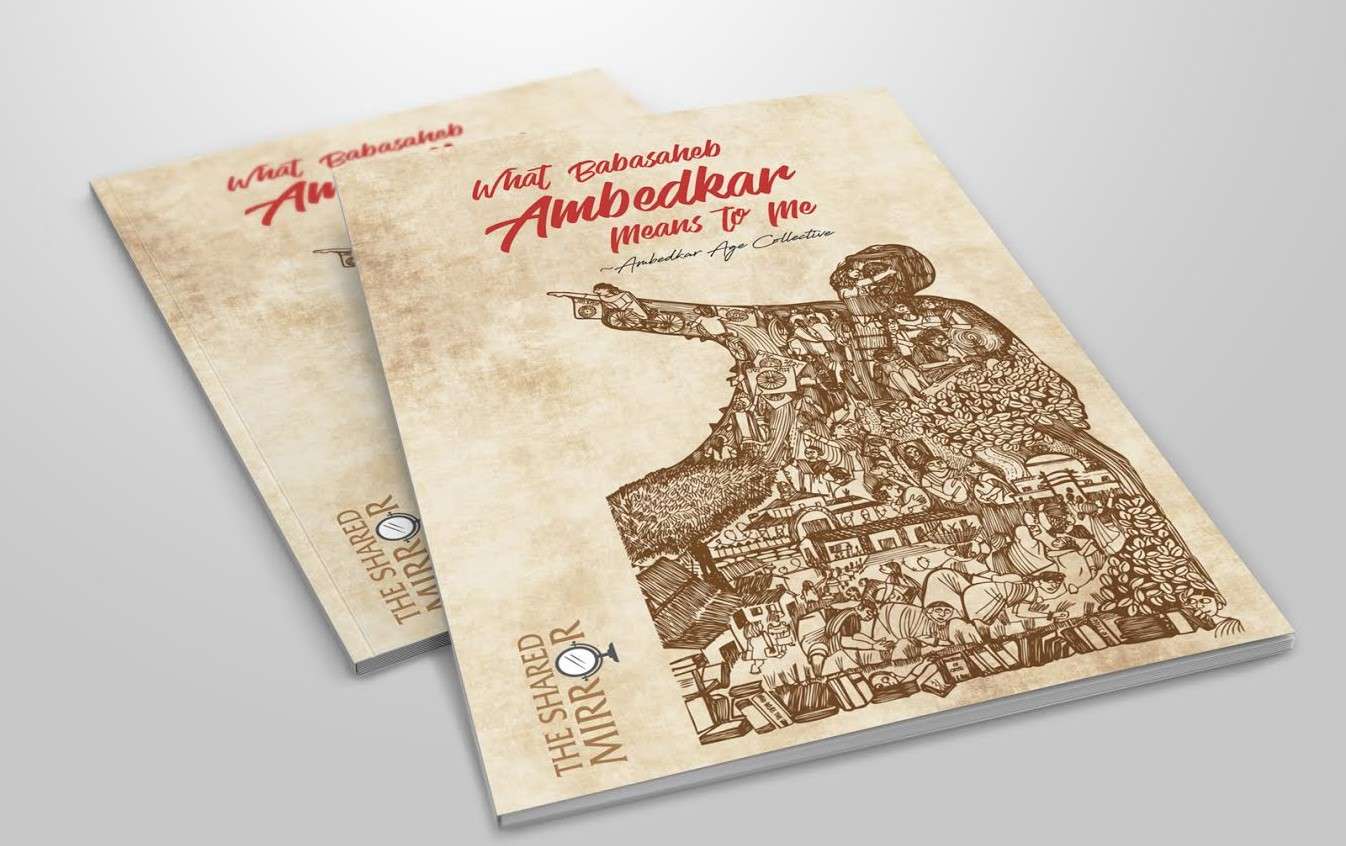
Print version of ‘What Babasaheb Ambedkar Means To Me’

Print version of ‘What Babasaheb Ambedkar Means To Me’

On popular demand, the print version of What Babasaheb Ambedkar Means To Me is now available on Amazon.in

Congratulations to the editors and all the authors! This book is the brainchild of SAVARI  editors Sruthi Herbert and Chetana Sawai along with Gurinder Azad. It has 13 women authors and an equal number of male authors reflecting on Babasaheb Ambedkar’s impact on them, in shaping their perspectives in all their pursuits and goals.

We are very proud of this book, it was envisioned and materialized by Sruthi and Chetana, and with this book, they lay open a clear path for visualizing different models of publishing. They are perhaps not the first Bahujan women editors engaged in publishing political commentary, but they sure are a unique team that gave us a glimpse of the diverse processes of politicization of contemporary young women and men into an Ambedkarite consciousness.

We wish Bahujan women editors of all languages the very best and look forward to reading more books from and by them.

This book was first published as a freely downloadable ebook —  a constant demand from readers for a print version: “for my parents and other elders who are not comfortable reading on screen,” from school teachers, “I want to gift it to my students”, from others, “We want it in our bookshelves” — the ebook has literally walked itself into a print version. This was made possible by the generous contributions from friends, we are very thankful to each one of them.

The book is available on Amazon.in prized at Rs 150.

https://www.amazon.in/What-Babasaheb-Ambedkar-Means-Me/dp/8192993027/ref=sr_1_1?ie=UTF8&qid=1551868057&sr=8-1&keywords=what+babasaheb+means+to+me

Enjoy!

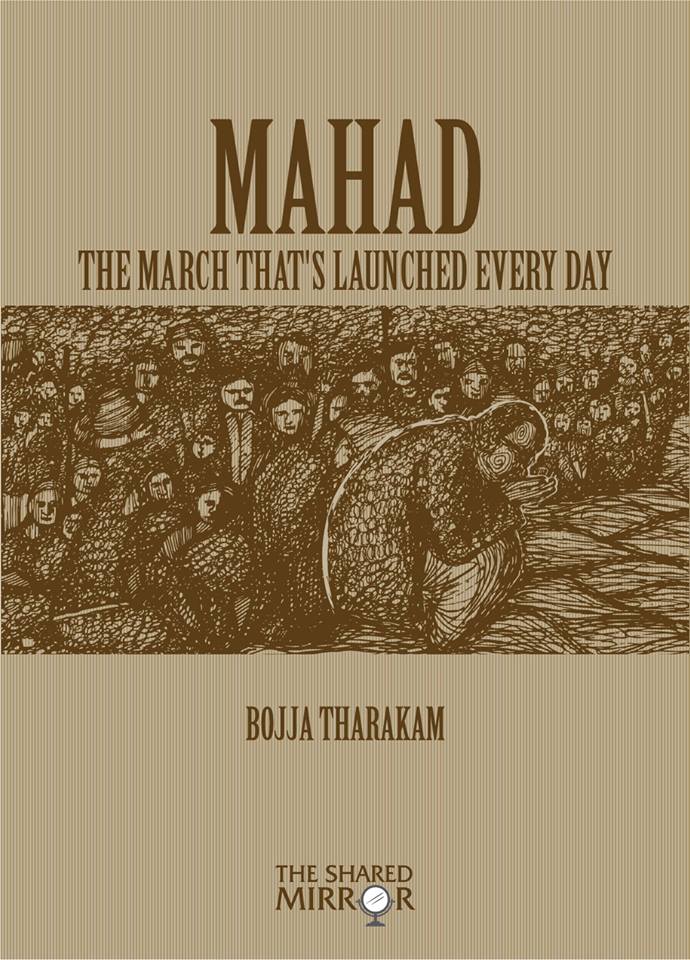
Mahad: The March That’s Launched Every Day – Order Now!

Our new book, Mahad: The March That’s Launched Every Day, from the pioneering human rights activist, Dalit thinker and Ambedkarite leader, Bojja Tharakam (1939-2016) is ready to be ordered.

~~~

Mahad and the erasure of real history

How did mainstream Indian history miss such a watershed event that subterraneously set the tone for all protest movements in India for the last 90 years? The same dominant social forces that fashioned Dandi into a defining project of anti-colonial, anti-imperialist, nationalist movements also erased all traces of Mahad from mainstream history. Gandhi and Dandi are alluring dominant narratives, almost myths, that are told and retold every day, to drown the din of the Mahads being launched every day.

There are many such stark insights in this book that only Bojja Tharakam could have offered:

  • Dandi was projected as an urgent need whereas Mahad voiced a millennia-old concern.
  • The Dandi marchers did not break any law, whereas, at Mahad, the ‘laws’ of Hindu society were broken.
  • A very complaisant state looked the other way when Dandi was being planned and executed, while Mahad had to face both an openly antagonistic society and a dilatory government.
  • Dandi happened at a stage when the colonial state was actively mulling over ‘independence’, while Mahad was the battle that started the continuing war for total freedom for all marginalised sections of India.

How to order:

To place an order, please email the following details to: thesharedmirror@gmail.com

* Your Name

* Your Postal Address

* Number of Copies

* Your Phone Number

* Method of Payment (see options below).

How to Pay 

(i) Transfer Rs 100 (discounted price plus postage) for each copy to the THE SHARED MIRROR PUBLISHING HOUSE’s bank account (details are given below).

(ii) Or order via VPP and pay Rs 100 (discounted price plus postage) on delivery.

Bank Details:

Account: THE SHARED MIRROR PUBLISHING HOUSE

Bank: AXIS BANK

Branch: Musheerabad, Hyderabad

Account number: 915020033000788

IFSC Code: UTIB0001112

Mahad: The March That’s Launched Every Day

A new book, from the pioneering Human Rights activist, Dalit thinker and Ambedkarite leader, Bojja Tharakam sir (1939-2016). Jai Bhim!

Our new book!

There are great marches in history, in Biblical lore…
Moses led his people across the sea to liberation. It took him forty years to lead his people to the Promised Land.
Ambedkar led his people to Mahad for equality through the barbaric caste system. The first phase of the march was between 19 March, 1927 andto 25 December, 1927. The second phase was between 26, December andto 17 March, 1937.
Gandhi led his Sabarmati ashramites to Dandi, starting on 12 March, 1930 and ending on 6 April, 1930, to defy an unjust alien law.
Mao led his people through a long march to revolution from Yangtze to Yenan starting on 16 October, 1934 and ending on 19 October, 1935.
There are marches and marches…
Workers march, peasants march, labourers march, soldiers march…
They march for liberty, for equality, and for freedom.
Mahad and Dandi are two such marches.
Dandi is known to many, only a few know Mahad


Edex Book Review of What Babasaheb Ambedkar Means To Me

Johanna Deeksha, journalist at Indian Express reviews What Babasaheb Ambedkar Means to Me. Read excerpt here below and the full review on Edex

Book for all ages 

‘What Babasaheb Ambedkar means to me’ is the second book that The Shared Mirror is publishing, the last one being Amazon’s best seller ‘Hatred in the Belly”. The Shared Mirror promotes Dalit-Bahujan literature and writers and aims to further the anti-caste discourse. The latest book, released on the 126th birth anniversary of the revolutionary leader, is a compilation of almost 30 articles on the authors’ first or most memorable tryst with Ambedkar, on how he leaves a mark on their everyday lives and how he pushes them to break barriers and emerge victors.

babasaheb_bookcover_1

Read more

Now on Smashwords – What Babasaheb Ambedkar Means To Me

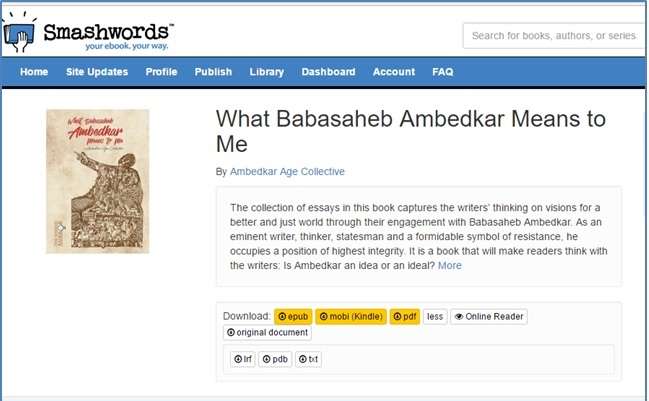
Our new book What Babasaheb Ambedkar Means To Me is now available on Smashwords – Ebooks from independent authors and publishers

The ebook can be downloaded in various formats and also read online, see screenshot below. (https://www.smashwords.com/books/)

Enjoy Reading!
smashwords1 For direct downloads in PDF format from The Shared Mirror website please click on the Download button: 

We will try our best to make this book available on as many platforms that support free distribution as possible.