कांशी राम जी की सोहबत में

कांशी राम जी की सोहबत में

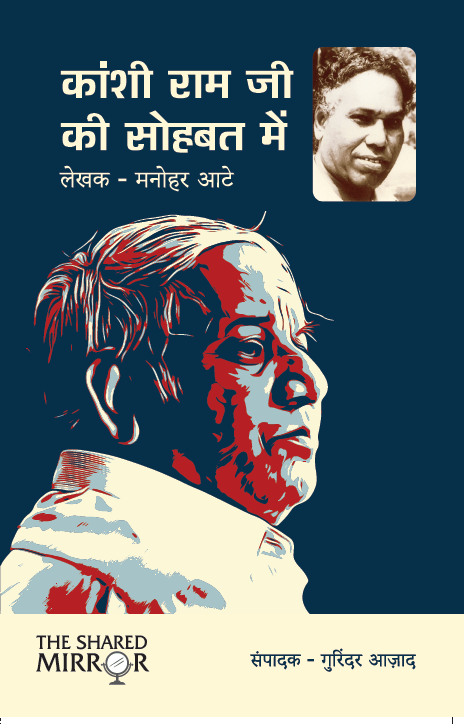
डॉ. बाबा साहेब आंबेडकर के महापरिनिर्वाण के बाद बहुजन समाज में एक अँधेरा छा गया। सर्व मिशन छिन्न-विछिन्न हो गया। ऐसी भयानक एवं खौफनाक सामाजिक परिस्थिति में पंजाब प्रान्त के रोपड़ जिले में एक नौजवान डॉ. बाबा साहेब आंबेडकर का एक सिपाही कांशी राम पूना शहर की सड़कों पर उतरा। निकला तो वह अकेला ही था लेकिन चलते-चलते उसे अनेक साथी मिलते गए। लेखक भी पूना की सड़कों का रोड-मास्टर है जो कांशी राम का एक साथी है। कारवाँ बढ़ता गया। कांशी राम को चैन की नींद कहाँ थी। सवेरे पाँच बजे वह सड़कों पर साइकिल लेकर सवार होता था। ना खाने की परवाह न सोने की। एक भूत सवार था उसके दिमाग में। बाबा का अधूरा मिशन, पूरा करना है। निकला, दिमागों के साथ दिलों को जोड़ने को। दिलों-दिमागों को जोड़ना बहुत कठिन काम था। लेकिन ‘पट्ठा’ इरादे का पक्का था। ‘जब इरादा पक्का हो तो रास्ता भी निकल आता है’ उसने रास्ता खोज लिया। ~ मनोहर आटे  

Price: Rs 200

New Book! NAVAYĀNA BUDDHISM: Context, Debates and Theories

New Book! NAVAYĀNA BUDDHISM: Context, Debates and Theories

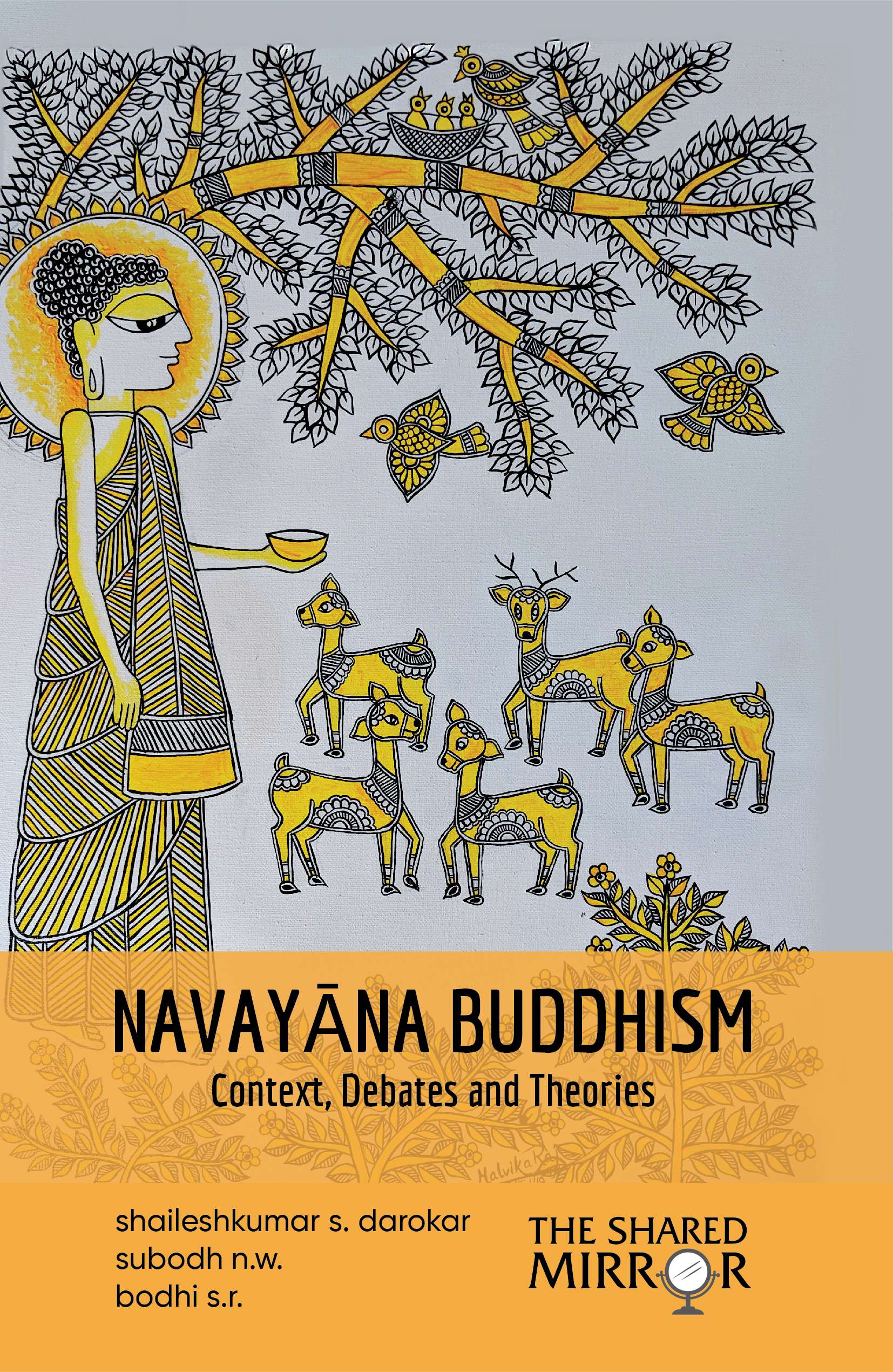
This book is an eclectic scholarly inquiry into Indian Buddhism post Dr. Babasaheb Ambedkar embracing the Buddha Dhamma Sangha in 1956. It engages with ontological propositions and debates concerning a methodology conceptualised by Babasaheb through a category he called ‘Navayana.’ In retrospect, through this category, Babasaheb attempted to partly revive and reclaim the original teachings of Sakyamuni, revise and reinterpret the history of Buddhism, and theoretically reposition the Buddha Dhamma in the Indian context. Based on the initial formulations and framework laid by Babasaheb, the first section of this book contextualizes and traces the historical evolution of this axiological movement; providing insights into the thinking, interpretation and experience of Indian Buddhists around the said category. The second section, titled ‘Equanimous Reflections,’ explores three fundamental processual Buddhist practices – the idea of taking refuge in the Tiratana, the process of epistemological reconstruction through Tisarana, and the Buddhist Way of Life as taught by Babasaheb.

New Book! EWS The Quota To End All Quotas

Our latest book, ‘EWS The Quota To End All Quotas’ by the Ambedkar Age Collective, has been released and is available to order here.

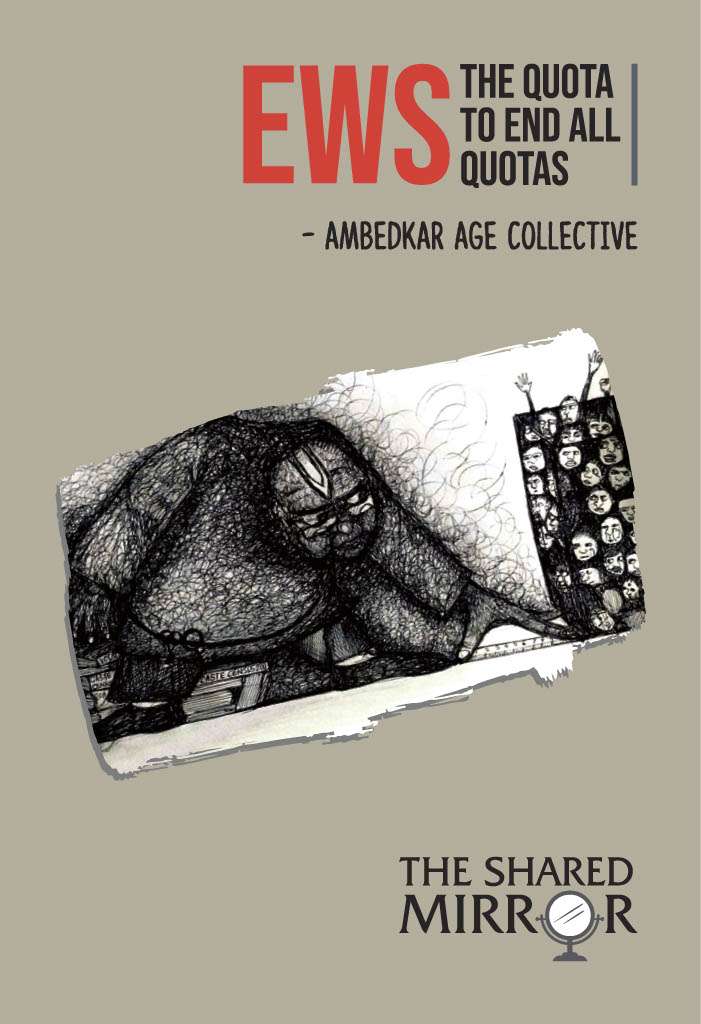
Reservations for the excluded majority in India began with SC/STs and followed by OBCs. They enabled increasing numbers of Bahujans to enter public institutions, despite strident abusive opposition. Now EWS, the counter-revolution is here. Will it end all other quotas? This book is a powerful collection of views and analyses of Bahujan political leaders, lawyers, researchers, writers, activists like: Dr. Suresh Mane, Dr. Thol. Thirumavalavan, Prof N Sukumar, Dr. Sthabir Khora, Dr. Ayaz Ahmad, Dr. Yogesh Pratap Singh, James Michael, Bobby Kunhu, Nidhin Donald, Rajanikanta Gochhayat, Omprakash Mahato, Jitendra Suna, Sundeep Pattem, Naaz Khair, Pradeep Dhobley, Abhishek Juneja, Naren Bedide (Kuffir): the book has their articulations, in the form of articles, papers, interviews, art etc.

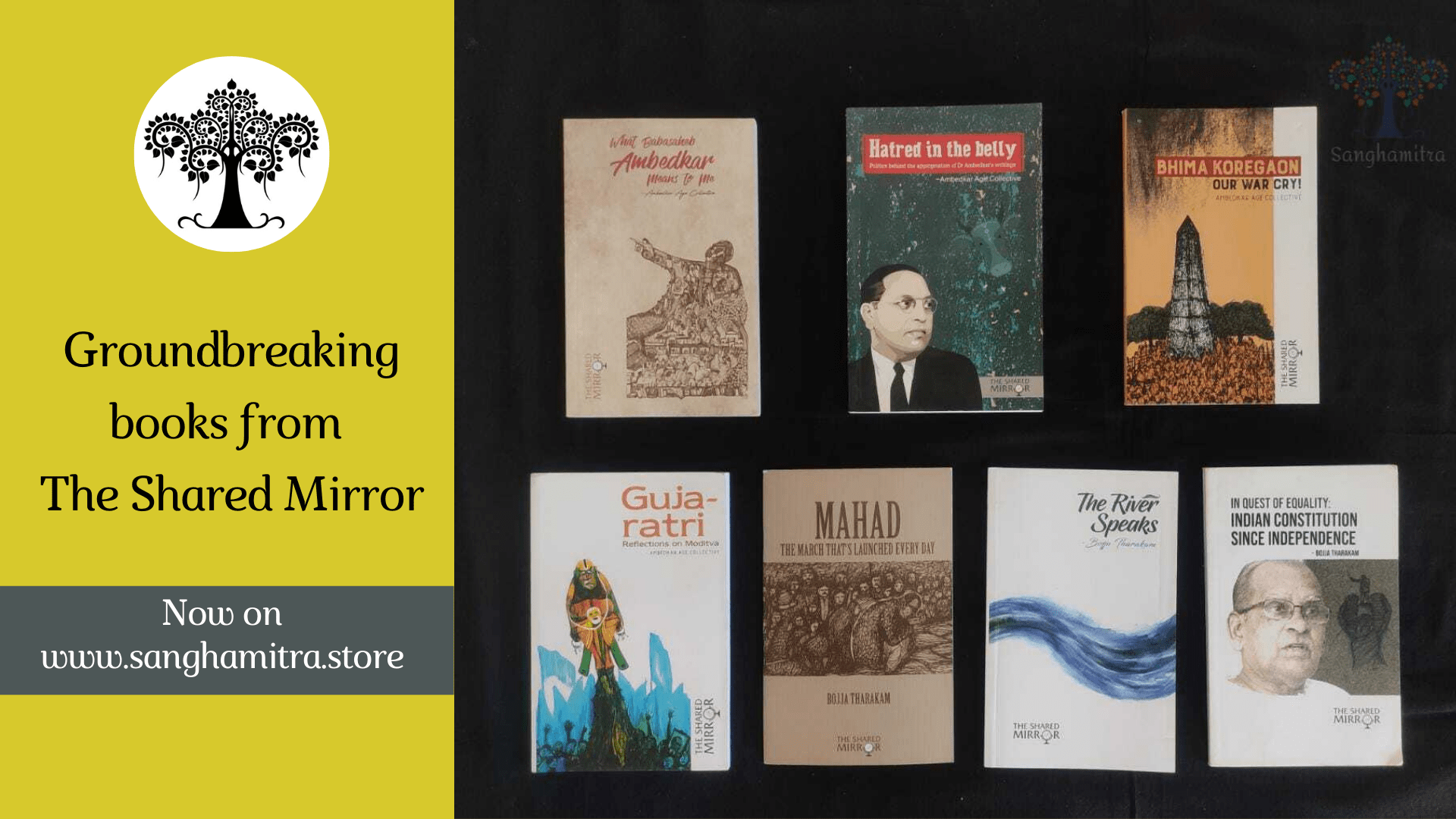
The Shared Mirror books now available on the Sanghamitra Store!

Excited to announce that all books from The Shared Mirror Publication House are now also available from the Sanghamitra store website: https://www.sanghamitra.store/

In addition to our books, the Sanghamitra store also features high quality products and brilliant artworks from the maker and artist partners of the Sanghamitra Business Incubator.

Follow Sanghamitra on social media here:

fb: facebook.com/sanghamitra.store

insta: instagram.com/sanghamitrastore

twitter: twitter.com/sanghamitrainc

New Book! Guja-ratri: Reflections on Moditva

Our latest book, ‘Guja-ratri: Reflections on Moditva’ by the Ambedkar Age Collective, has been released and is available to order here.

If Hindu Raj does become a fact, it will, no doubt, be the greatest calamity for this country. No matter what the Hindus say, Hinduism is a menace to liberty, equality and fraternity. On that account it is incompatible with democracy. Hindu Raj must be prevented at any cost. ~ Babasaheb Ambedkar, Pakistan, or, The Partition of India

Has India finally arrived at that dreaded moment: the advance of Hindu Raj?

This book is a compilation of critical observations, commentary and reflections on the rise of Moditva, the weaponised arm of Hindutva consciousness, since 2002. The coinage ‘Guja-ratri’ is borrowed from a poem by the Telugu poet K. G. Sathyamurthy (‘Sivasagar’) on the communal carnage of 2002 in Gujarat.

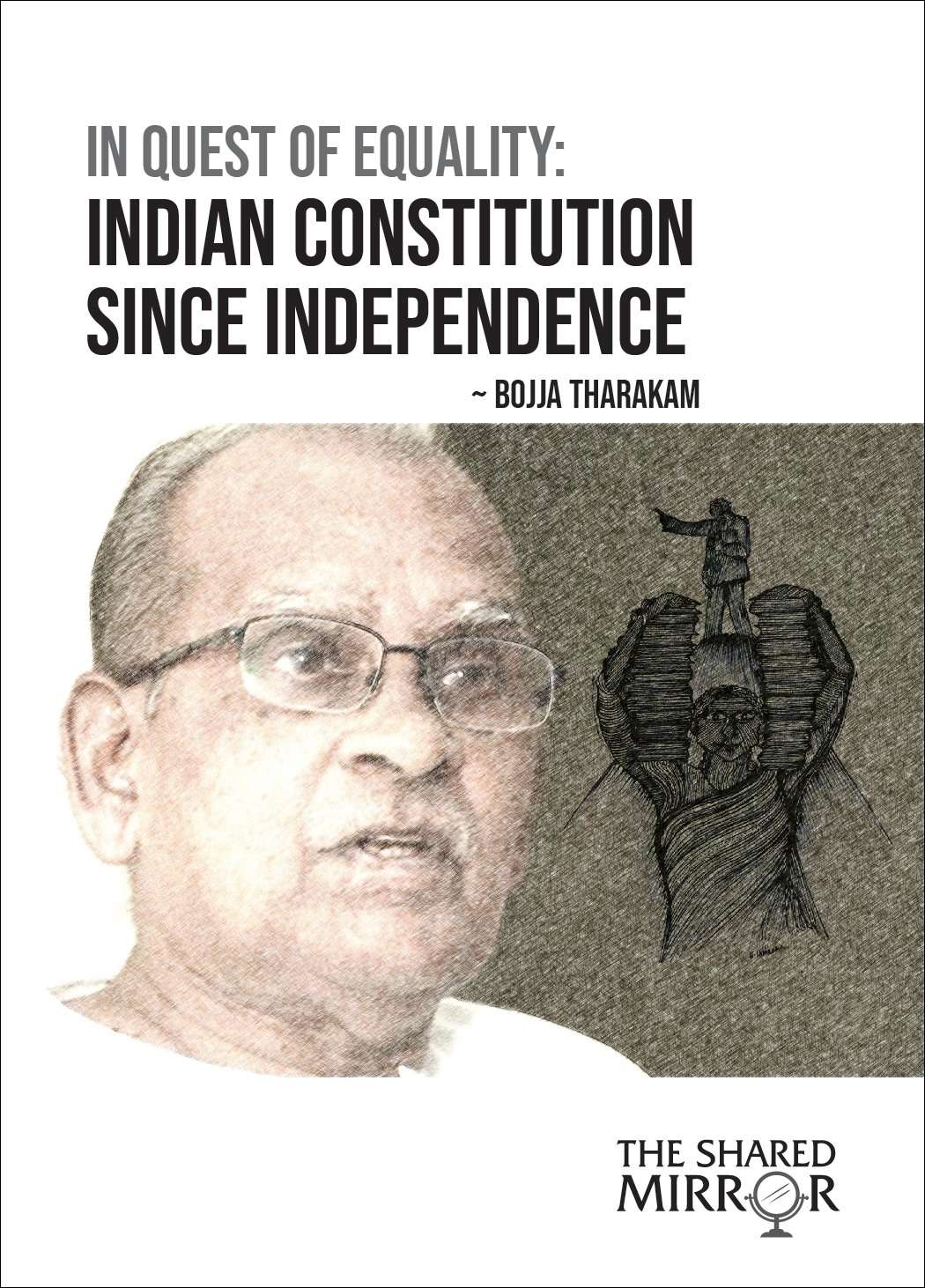
New book! In Quest of Equality: Indian Constitution Since Independence.

Our latest book, ‘In Quest of Equality: Indian Constitution Since Independence’ by Bojja Tharakam, has been released and is now available to order on Amazon here.

~ For “We the people of India” who gave unto themselves a Constitution glowing with promises of justice—social, economic and political, the situation appears to be not moving an inch forward towards the tantalizing objective of ‘Equality’. In fact, it is drifting away from it inch by inch from year to year. Six, seven decades of delay for such people is too arduous and intolerable. Since the Constitution of India made promises of social, economic and political equality, guaranteed liberty and assured freedom, it is nothing but natural for the people to wait in expectation of the performance of the Constitution in its fulfillment of its lofty goals. Equality should encompass all. It is not just a level playing exercise, it brings forth the essence of democracy in an effort to humanize people. Here is an attempt to look into the sojourn of the Constitution during these eventful post-independence years by the formidable, legal, political and social activist, human rights defender, Bojja Tharakam (1939-2016) who fought all his life for the cause of the Dalits and other marginalized. ~

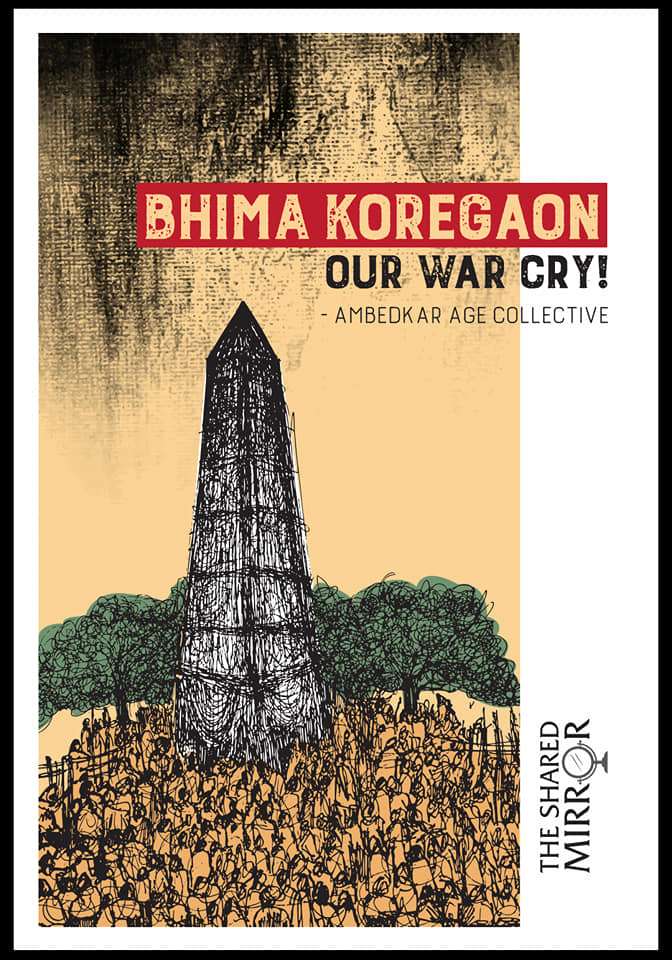
New book! Bhima Koregaon: Our War Cry!

Our latest book, ‘Bhima Koregaon: Our War Cry!’, has been released and is now available to order on Amazon here.

~ The Bhima Koregaon monument has emerged as a symbol of the marginalized. For the student of history, Bhima Koregaon is a site that lets one be awed by the determination to memorialize in the face of subtle to brute resistance from the ruling classes. In this book, through events around Bhima Koregaon monument we get a glimpse of the dynamic interaction of tangible physicality and intangible memory. The essays provide evidence for the historical processes of building the monument, the political context in 1818, its remembrance through the collective memory of the marginalized, its erasure by the ruling classes and some 200 years later in the year 2018, large scale state violence on the marginalized. What is the connection between the ruling class in the region in 1818 and in 2018? Who are they? Who are the people who are resisting the memory and who are the people who want to remember 1818? What does it say about the caste system? Bhima Koregaon does not lend itself to easy binaries like: Hindu- Muslim, Colony-Post-Colony, Nation-Colonizer, etc. It works on the main fault line of the subcontinent – caste. ~

Order the book on Amazon here.

New book! The River Speaks, poems by Bojja Tharakam.

We are glad to announce our new book, ‘The River Speaks’, a collection of poems written by lawyer, human rights activist, writer, intellectual Bojja Tharakam (1939-2016) in 1976, when he was jailed during the Emergency. It is a brilliant commentary on the Indian state, society, and the ruling classes. The poems have been translated from the original Telugu by Naren Bedide (Kuffir).

It is available to order from amazon.in.

~ Emergency was clamped on 26th June 1975. Many thousands were thrown into jail. Fear gripped the entire country. Many people I knew were arrested. Whoever was perceived as ‘opposing Indira Gandhi’s policies’ was arrested. Political activists were anyway not spared, but they arrested writers too. The police had been sending reports about me (to their bosses) saying, ‘he has developed good relations with the people, and is also a writer’ for quite long.

July 4th.. I returned home from the court a little late. It was already dark, and a light drizzle was falling. The police inspector arrived. ‘The SP wants to see you’, he said. I understood. I told Bharathi, ‘they’ll arrest me’. We went in a police jeep. There was a bustle at the SP’s house, with police vans.. jeeps.. He told me, ‘we’re arresting you’. I said, ‘I’ll inform my people at home and return’. They sent me back in the same jeep, which was filled with armed policemen by then. When we reached my home, it was already surrounded by gun toting policemen. As I went inside, a policeman with a gun accompanied me.

The first arrest was in Nizamabad.. ~ Bojja Tharakam, in the original preface to the collection of poems, ‘The River Speaks’.

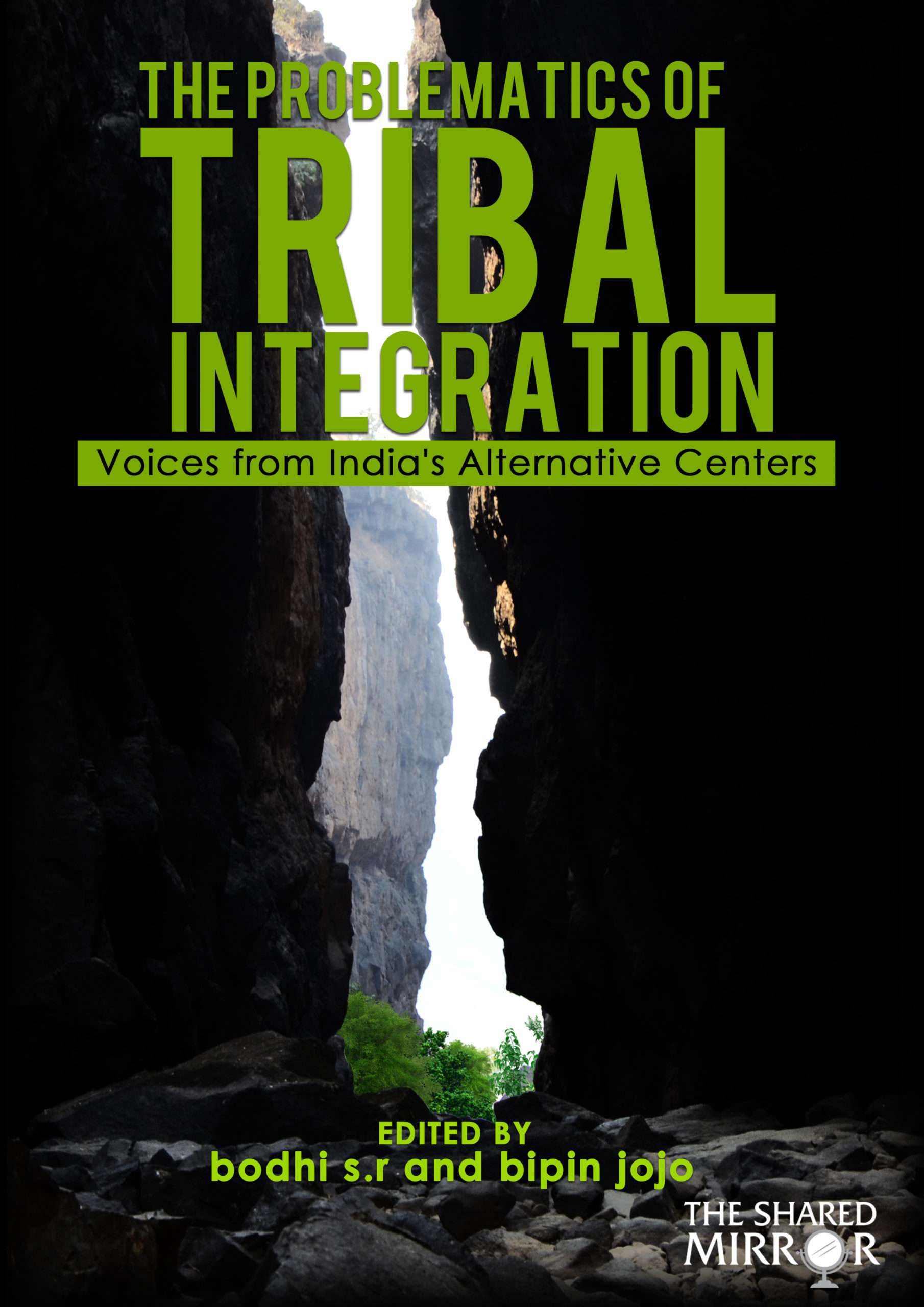
New ebook! The Problematics of Tribal Integration: Voices from India’s Alternative Centers

New ebook! The Problematics of Tribal Integration: Voices from India’s Alternative Centers

We are happy to announce our new ebook ‘The Problematics of Tribal Integration: Voices from India’s Alternative Centers‘ published by the collaboration between The Shared Mirror Publishing House and the Tribal Intellectual Collective India. We thank all the authors, copy-editors, proofreaders, friends and families who have contributed to the making of this book and have generously made this book available as a free download.

About the book

The book is thematised into four sections. Under the first section – Problematizing The
Discourse and Context are two chapters written by the indigenous scholar and foremost Tribal/Adivasi studies expert Prof Virginius Xaxa on the subject ‘Tribes and Indian National Identity: Location of Exclusion and Marginality’. This chapter is followed by a historical conspectus of the integration process from a tribal perspective by bodhi s.r & raile r. ziipao.
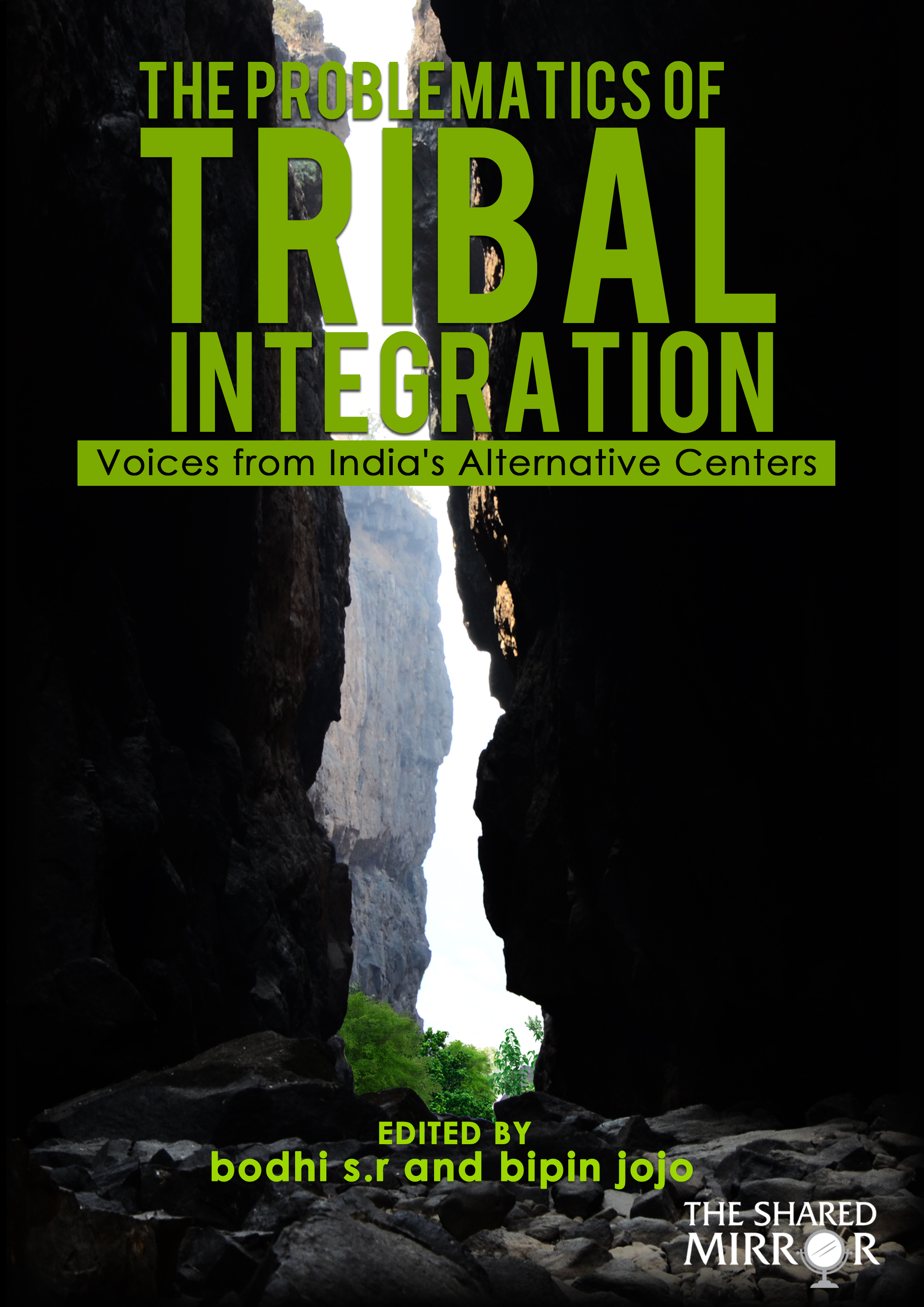
The second section – The Frame of Reference constitutes of four chapters. The first by Monica Sakhrani critically examines the politico-historical location of Scheduled Tribes in the Indian Constitution. The second is written by the foremost indigenous historian Bhagya Bhukya on the complex subject of Marxist and Nationalist constructions of adivasi uprising in India. This is followed by Rimi Tadu on the subject of integration and the state making process in the north east of India and by a chapter on the ideas of adivasi development of Verrier Elwin and Jawaharlal Nehru by Venkatesh Vaditya.

The third section of the book – Concrete Conditions and Dynamics is written by eleven
scholars. Each engages with the immediate context from varied regions of India. The first is written by J.J.Roy Burman on the complex subject of Sacred Groves. This is followed by
Shyamal Bikash Chakma on the controversial concept of Conservation Refugees and Richard Kamei who interrogates the concept of Collective Bargaining among the Rongmei Tribe in the state of Manipur. Following these chapters, we have Joseph Riamei writing on Tribes, Governance and Political Institutions in North East India, Kerlihok L. Buam on the Sixth Schedule and the Jaintia Hills Autonomous District Council, Jagmohan Boro on Rabha Ethnic Politics and Role of the State, Batskhem Myrboh on Non-tribal Migration in Meghalaya, Vulli Dhanaraju on Tribal Resistance to Colonial Construction of ‘Agency’ in Andhra, Pandurang Bhoye on Movements and Organisations among Adivasis in Maharashtra, Abhay Xaxa on Implications of Mining in Fifth Schedule Areas and Niraj Lakra who examines the fall out of the government’s attempt to Amend the CNT and SPT Act in the state of Jharkhand.

The last sections of the book are transcripts of two conversations and speeches by John F.
Kharshiing, the Adviser and Spokesperson of the Federation of Khasi States in his address to the General Assembly of Indigenous and Tribal Peoples and by Saneka Munda, an active participant of the Khutkati Rights Movement in Chotanagpur to the second national congress of the Tribal Intellectual Collective India.

This series is an academic collaboration between the Tribal Intellectual Collective India and The Shared Mirror. With the exceptions of a few, most of these chapters have been written by tribal/Adivasi scholars who are engaged with the subject. The Tribal Intelectual Collective India is one of the only academic fora of the tribes/Adivasis in India with a pan India membership.

~~~

Copyright © 2019, The Shared Mirror Publishing House and Tribal Intellectual Collective India (of the collection).

Copyright © of each work belongs to the respective author.